 Magnetic Blocks guide
Tangram Puzzles: History, Rules and How to Solve Them
By Muhammad Shahid Khan · · 4 min read
Quick answer
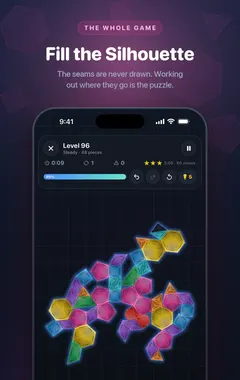
A tangram is a puzzle of seven flat pieces (two large triangles, one medium triangle, two small triangles, a square and a parallelogram) cut from a square. The goal is to arrange all seven, without overlapping, to fill a given silhouette. It originated in China and became a worldwide craze in the early 19th century.
Magnetic BlocksTangram Shape Fit Puzzle Game · Free on the App StoreDownload free →| Pieces (tans) | 7: 5 triangles, 1 square, 1 parallelogram |
|---|---|
| Rules | Use all pieces, no overlaps, fill the silhouette |
| Origin | China. Spread to Europe and America around 1815 to 1817 |
| Known shapes | Thousands of published figures |
The tangram is one of the oldest and most elegant puzzles in the world: seven simple shapes that can make thousands of figures, from animals and people to boats and letters. It is also the inspiration behind shape-fitting games like Magnetic Blocks.
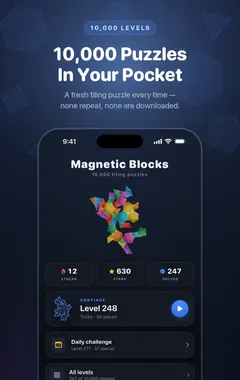
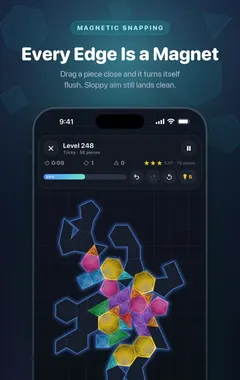
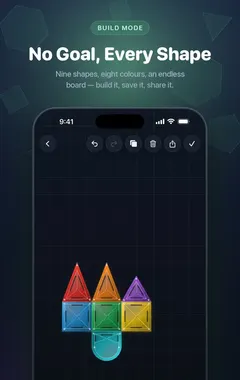
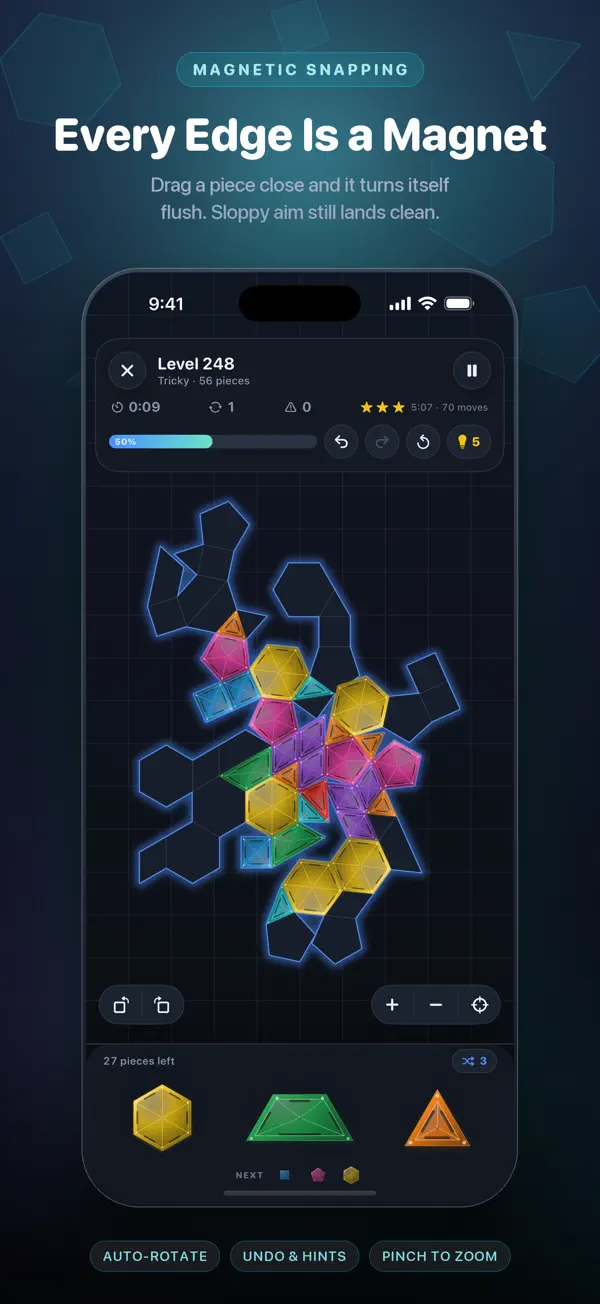
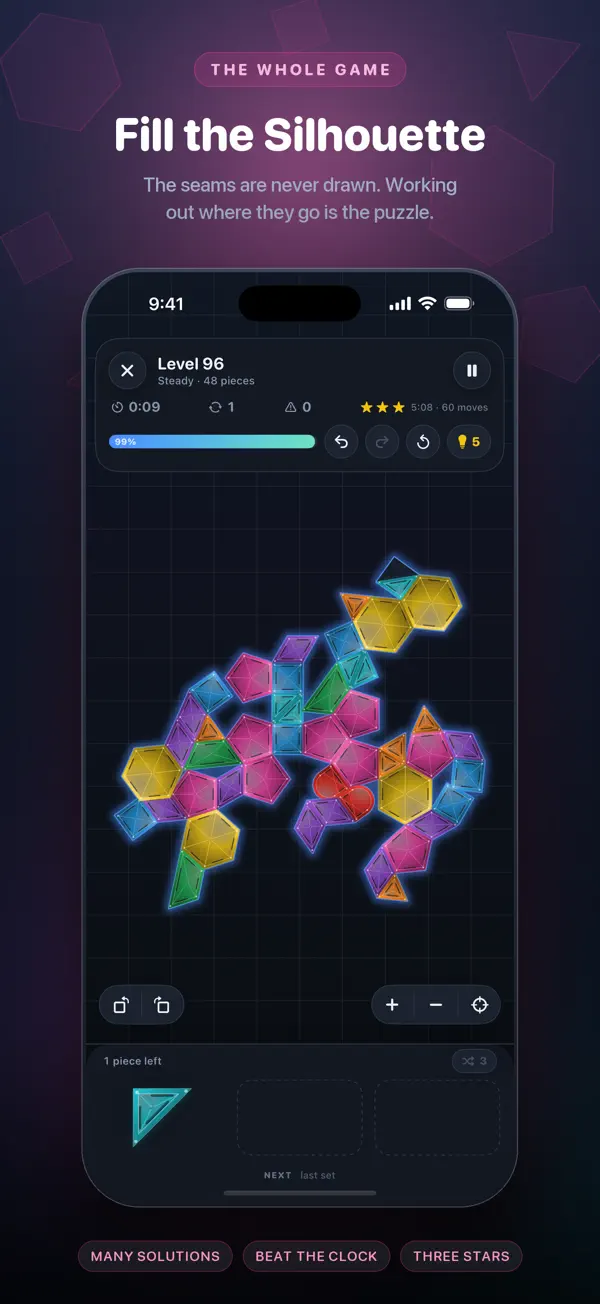
I build Magnetic Blocks: Fill & Relax, a free, calm tangram-style puzzle game for iPhone and iPad, and the screenshots here come from it. If you want to try a puzzle as you read, get Magnetic Blocks on the App Store.
What are the seven tangram pieces?
A classic tangram is a square cut into seven pieces, called tans:
| Piece | How many | Notes |
|---|---|---|
| Large right triangle | 2 | Each is a quarter of the original square |
| Medium right triangle | 1 | Half the area of a large triangle |
| Small right triangle | 2 | The basic unit: everything else is built from these |
| Square | 1 | The same area as two small triangles |
| Parallelogram | 1 | The same area as two small triangles. Must be flipped to make some shapes |
What are the rules?
- Use all seven pieces.
- Pieces must lie flat and must not overlap.
- Pieces must touch to form the figure.
- The finished arrangement must exactly match the silhouette.
You can rotate pieces and flip them over. Flipping only matters for the parallelogram, because every other piece is symmetrical.
Where does the tangram come from?
The tangram comes from China, where it was known as qiqiaoban, often translated as "seven boards of skill". Books of tangram problems were published in China in the early 1800s. Around 1815 to 1817, tangram sets and books reached Europe and America on trading ships, and the puzzle became a craze, played everywhere from parlours to royal courts. The origin of the English word "tangram" is uncertain.
How do I solve a tangram puzzle?
- Place the large triangles first. They take up half the area and have the fewest possible positions.
- Look for sharp corners in the silhouette. A 45-degree point is almost always the tip of a triangle.
- Look for long straight edges. They usually come from a large triangle's longest side.
- Leave the small pieces for last. The two small triangles fill gaps that nothing else fits.
- If the parallelogram will not fit, flip it. This is the most common reason people get stuck.
- Count the area. If the remaining gap is the size of two small triangles, it must be the square, the parallelogram, the medium triangle or both small triangles.
Many of these ideas apply to all shape-fitting puzzles. I go further in 8 strategies for shape-fitting puzzles.
How is Magnetic Blocks different from a classic tangram?
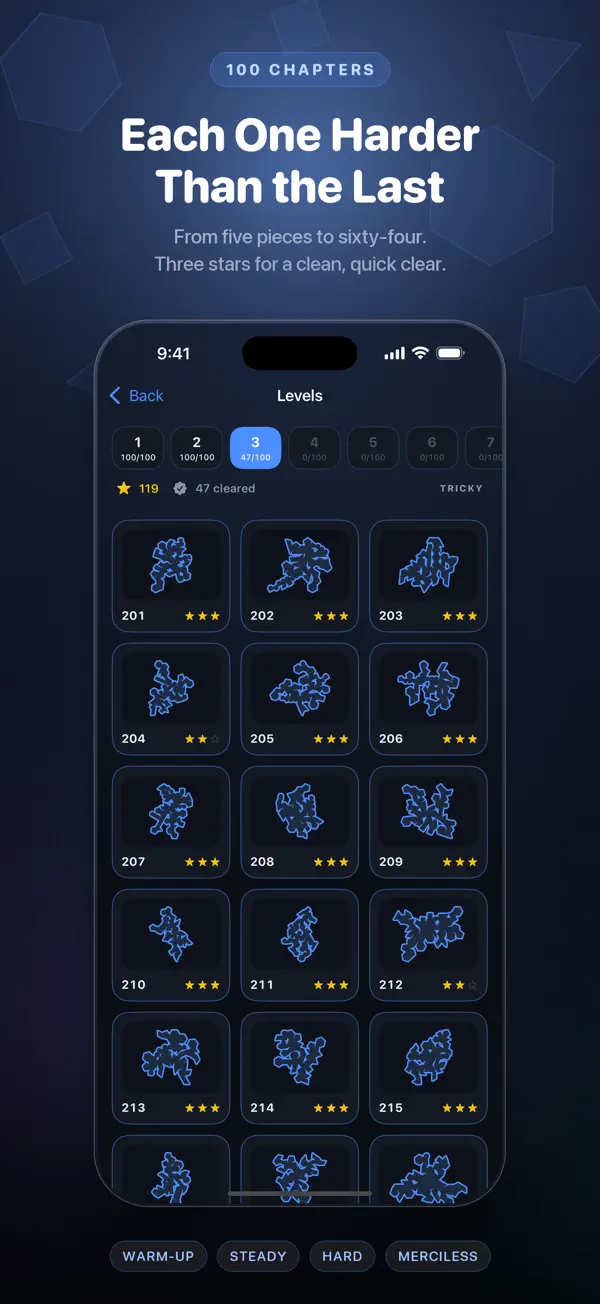
- More pieces and bigger silhouettes, from five-piece warm-ups to sixty-four-piece challenges.
- Magnetic snapping: drop a piece near the right place and it lines up, so there is no fiddly pixel-precise dragging.
- Many valid solutions for most puzzles, rather than just one.
- Auto-rotate, hints and undo when you are stuck.
- 10,000+ puzzles that never repeat, all offline.
More guides you may find useful:
- Tangram Shapes: 30 Figures to Make With the 7 Pieces (Animals, People, Objects)
- Tangram for Kids: How to Teach It by Age, and What Children Learn
- How to Get Three Stars in Magnetic Blocks (and Move Up the Difficulty Tiers)
How Magnetic Blocks helps
- 10,000+ puzzles generated on your device, across 100 chapters and ten difficulty tiers.
- Magnetic snapping: drop a shape near its place and it lines up.
- No clock pushing you, with optional three-star ratings for a clean, fast clear.
- Daily challenges with a streak, and Build Mode for free creative play.
- Hints, undo, auto-rotate and pinch-to-zoom so every puzzle stays approachable.
- Fully offline, rated 4+, with no third-party ads and no tracking.
Download Magnetic Blocks free on the App Store and fill your first silhouette in under a minute.
Frequently asked questions
What is a tangram?
A dissection puzzle of seven flat pieces cut from a square. You arrange all seven, without overlaps, to fill a given silhouette.
What are the 7 tangram pieces?
Two large triangles, one medium triangle, two small triangles, one square and one parallelogram.
Where did the tangram come from?
China, where it was called qiqiaoban. It spread to Europe and America around 1815 to 1817 and became a craze.
Can you flip tangram pieces?
Yes. Pieces can be rotated and flipped. Flipping only changes the parallelogram, because the other pieces are symmetrical.
Do you have to use all seven pieces?
Yes. A classic tangram solution uses all seven pieces with no overlaps.
How many tangram shapes are there?
Thousands of figures have been published, and new ones can always be designed.
What is the best strategy for solving tangrams?
Place the two large triangles first, match sharp corners to triangle tips, leave the small triangles for last, and flip the parallelogram if it will not fit.
Are tangrams good for the brain?
Tangrams exercise spatial reasoning and problem-solving, which is why they are widely used in classrooms to teach geometry.
Is Magnetic Blocks a tangram game?
It is a tangram-style shape-fitting puzzle: you fill silhouettes with shapes, with magnetic snapping, more pieces and many valid solutions per puzzle.
Does Magnetic Blocks have hints?
Yes, along with undo, auto-rotate and pinch-to-zoom.
Magnetic BlocksDownload free