 UK Test Prep guide
Hardest Life in the UK Test Topics: Dates, Numbers and Facts People Get Wrong
By Muhammad Shahid Khan · · 6 min read
Quick answer
The questions people most often get wrong are about history dates (1066, 1215, 1588, 1688, 1707, 1918 and 1928), the four nations (patron saints, saints' days and what counts as Great Britain), voting milestones and government numbers. Learn them with flashcards and practise questions that mix similar facts together.
UK Test PrepCitizenship, ILR & Visa Prep · Free on the App StoreDownload free →Most people who fail the Life in the UK test miss by one or two marks, and those marks usually come from the same small set of topics. The facts themselves are not hard. The problem is that the test puts similar facts next to each other as answer options. Here are the topics that cause the most trouble, with simple ways to keep them apart.
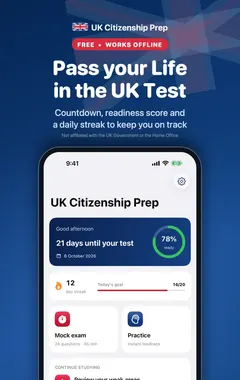
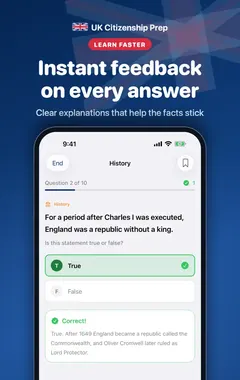
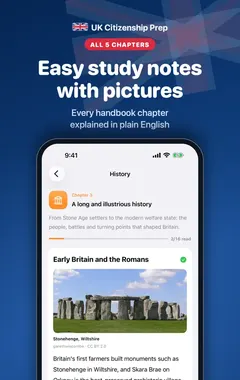
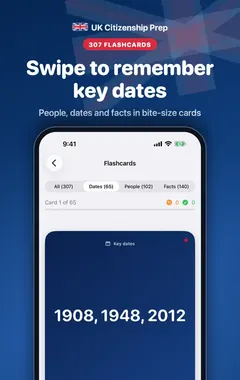
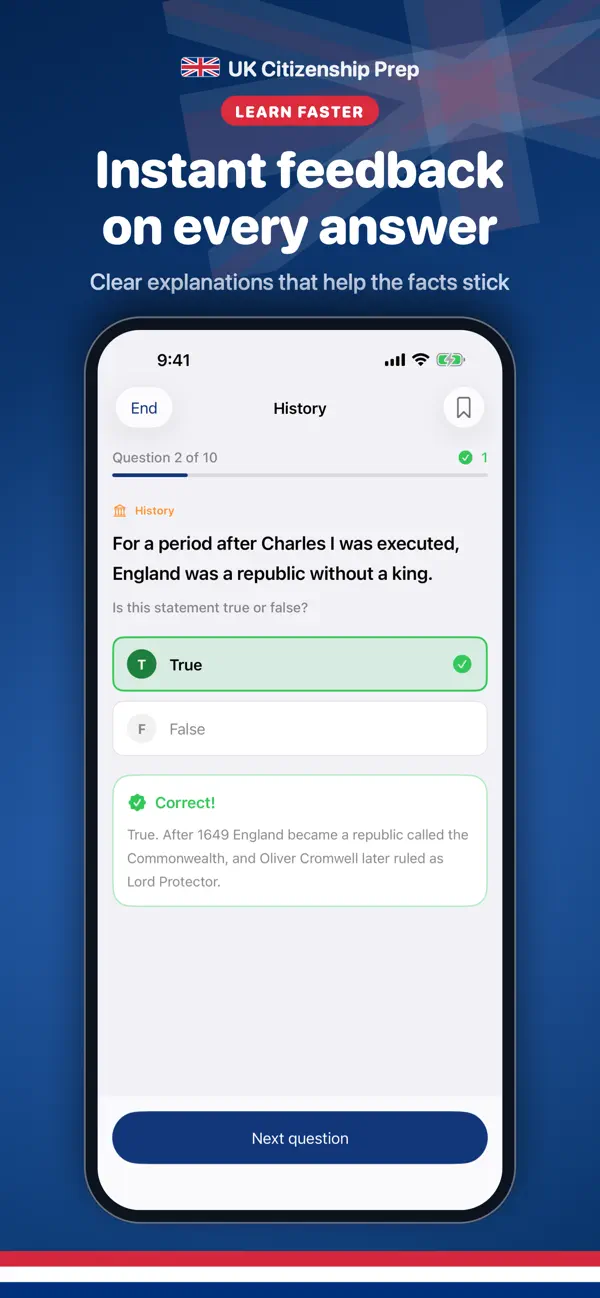
I build UK Test Prep, a free iPhone and iPad app for the Life in the UK test, and the screenshots in this guide come from it. If you want to test yourself as you read, get UK Test Prep on the App Store.
All facts below come from the official handbook, Life in the United Kingdom: A Guide for New Residents (3rd edition). The test only examines what is in the handbook, so learn it as the handbook states it.
Which history dates should I learn?
You do not need to memorise every date in chapter 3, but these come up again and again:
| Year | Event |
|---|---|
| 1066 | Battle of Hastings: William of Normandy defeats King Harold (the Norman Conquest). |
| 1215 | King John agrees to the Magna Carta, limiting the power of the king. |
| 1314 | Battle of Bannockburn: Robert the Bruce defeats the English. |
| 1455 to 1485 | Wars of the Roses, ending at the Battle of Bosworth Field and the start of the Tudors. |
| 1588 | The English defeat the Spanish Armada. |
| 1603 | James VI of Scotland becomes James I of England: one monarch for both countries. |
| 1642 | The Civil War begins between Charles I and Parliament. |
| 1649 | Charles I is executed and England becomes a republic. |
| 1660 | The Restoration: Charles II becomes king. |
| 1688 | The Glorious Revolution: William of Orange becomes king. |
| 1707 | Act of Union: England, Wales and Scotland become the Kingdom of Great Britain. |
| 1801 | Act of Union with Ireland creates the United Kingdom of Great Britain and Ireland. |
| 1837 to 1901 | Reign of Queen Victoria. |
| 1914 to 1918 | The First World War. |
| 1939 to 1945 | The Second World War. D-Day landings in 1944. |
| 1948 | The National Health Service (NHS) is created. |
Memory trick: group dates into "unions". 1603 is one monarch, 1707 is one kingdom (Great Britain), and 1801 adds Ireland. Every union step adds something.
How do I remember the patron saints?
| Nation | Patron saint | Saint's day |
|---|---|---|
| Wales | St David | 1 March |
| Northern Ireland (and Ireland) | St Patrick | 17 March |
| England | St George | 23 April |
| Scotland | St Andrew | 30 November |
Memory trick: in calendar order, it is D, P, G, A: David, Patrick, George, Andrew. Two in March, one in April, and Scotland closes the year. The handbook notes that only Scotland and Northern Ireland have their saint's day as an official holiday.
What is the difference between the UK and Great Britain?
- Great Britain is England, Scotland and Wales.
- The United Kingdom is England, Scotland, Wales and Northern Ireland.
- The Channel Islands and the Isle of Man are Crown dependencies with their own governments. They are not part of the UK.
This appears in true/false and "which statement is correct" questions, so learn it exactly.
Which voting dates do people mix up?
| Year | Change |
|---|---|
| 1918 | Women over 30 get the right to vote. |
| 1928 | Women get the right to vote at 21, the same age as men. |
| 1969 | The voting age is reduced to 18 for men and women. |
Memory trick: "18 at 30, 28 at 21". In 1918 the age was 30, and in 1928 it became 21.
Which government facts come up most?
- The UK is a constitutional monarchy. The monarch is head of state, and the Prime Minister leads the government.
- General elections are held at least every five years.
- The House of Commons is elected. The House of Lords is not.
- The Speaker keeps order in the House of Commons and is politically neutral.
- Scotland, Wales and Northern Ireland each have a devolved parliament or assembly with power over some areas, such as health and education.
- You can vote in UK general elections from 18.
How do I stop these facts slipping?
- Use flashcards daily for every date, number and name in the tables above.
- Practise mixed questions, not just one chapter at a time, so you get used to similar facts as distractors.
- Retest your mistakes a day later. If you got a date wrong once, you are likely to get it wrong again.
- Take timed mocks to check the facts hold up under pressure.
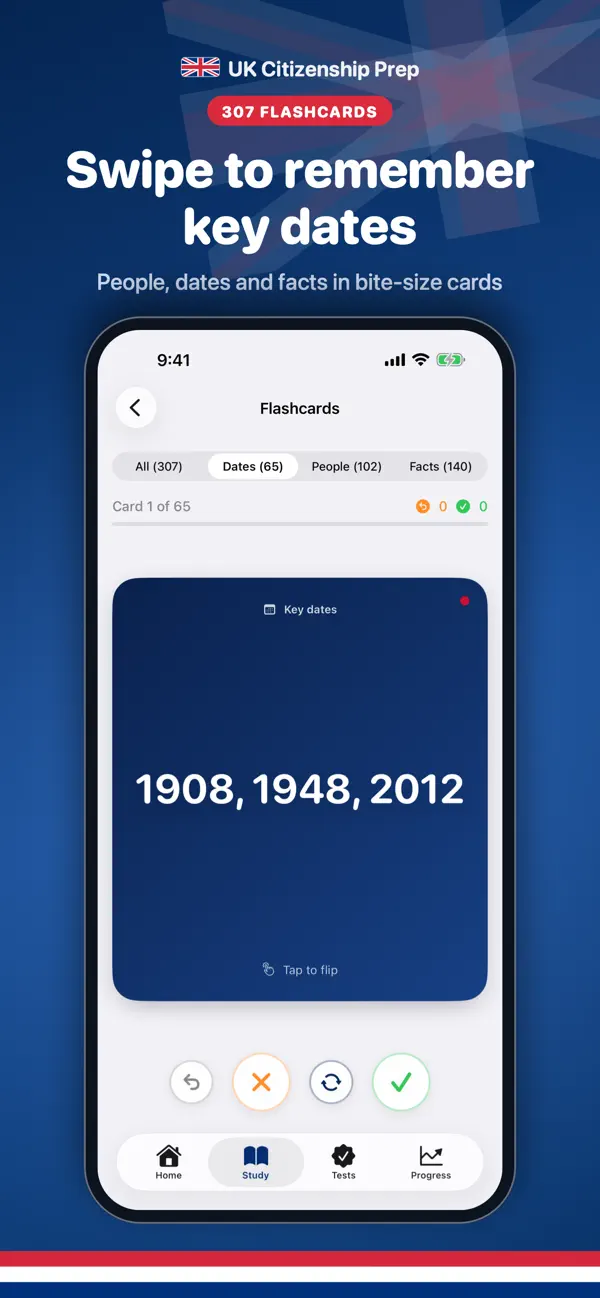
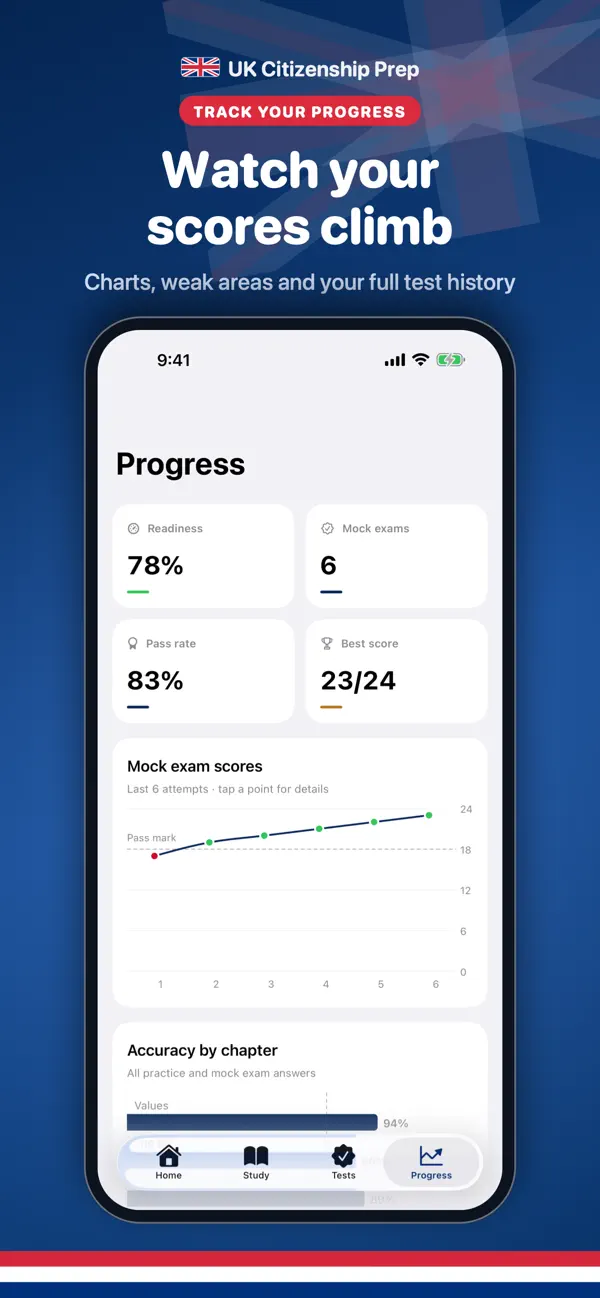
UK Test Prep does the tracking for you. Questions you get wrong go straight into an automatic weak-areas list, and its 307 flashcards cover the dates, people and facts in this guide.
More guides you may find useful:
- British History Timeline for the Life in the UK Test: Every Key Date in Order
- Famous British People in the Life in the UK Test: Scientists, Writers, Artists and Sportspeople
- British Festivals, Traditions and Sport: What the Life in the UK Test Asks
How UK Test Prep helps
- 1,250 original practice questions across all five handbook chapters, each with an explanation.
- 46 study note sections written from the official handbook.
- 307 flashcards for the dates, people and facts that need memorising.
- A realistic mock exam: 24 questions, a 45-minute timer and the 18-mark pass line.
- A weak-areas list, readiness score, streaks and progress by chapter.
- Works fully offline, with no account. Every feature is free; an optional purchase removes ads.
Download UK Test Prep free on the App Store and pass the Life in the UK test first time. UK Test Prep is independent and not affiliated with the UK Government or the Home Office.
For the full revision schedule, see the 4-week Life in the UK test study plan.
Frequently asked questions
What is the hardest part of the Life in the UK test?
Chapter 3, the history chapter. It has the most dates and names, and the test often uses real dates from the handbook as wrong answers.
When was the Battle of Hastings?
1066. William of Normandy defeated King Harold, starting the Norman Conquest.
When was the Magna Carta signed?
In 1215, when King John agreed to it. It limited the power of the king.
When did women get the vote in the UK?
Women over 30 got the vote in 1918. In 1928 women got the vote at 21, the same age as men.
When was the voting age lowered to 18?
In 1969, for both men and women.
What are the patron saints of the UK?
St David (Wales, 1 March), St Patrick (Northern Ireland, 17 March), St George (England, 23 April) and St Andrew (Scotland, 30 November).
Is Northern Ireland part of Great Britain?
No. Great Britain is England, Scotland and Wales. Northern Ireland is part of the United Kingdom, but not of Great Britain.
Are the Channel Islands part of the UK?
No. The Channel Islands and the Isle of Man are Crown dependencies with their own governments.
What was the Act of Union of 1707?
It united England, Wales and Scotland as the Kingdom of Great Britain, with one Parliament.
When was the NHS founded?
In 1948.
How often are general elections held?
At least every five years.
How do I memorise Life in the UK test dates?
Use flashcards daily, group related dates together (for example 1603, 1707 and 1801 for the unions), and practise mixed questions where similar dates appear as options.
UK Test PrepDownload free