 UK Test Prep guide
Life in the UK Test Practice Questions: How to Use Them to Pass First Time
By Muhammad Shahid Khan · · 6 min read
Quick answer
Practice questions work best when you use them to find gaps, not to memorise answers. Study one handbook chapter, answer questions on it straight away, read the explanation for every mistake, and retest your weak areas a day later. Move on to full 24-question timed mocks once you have covered all five chapters, and book the test when you score 21+ consistently.
UK Test PrepCitizenship, ILR & Visa Prep · Free on the App StoreDownload free →| Real test | 24 questions, 45 minutes, 18 to pass |
|---|---|
| Question types | Single answer, true/false, which statement is correct, choose two |
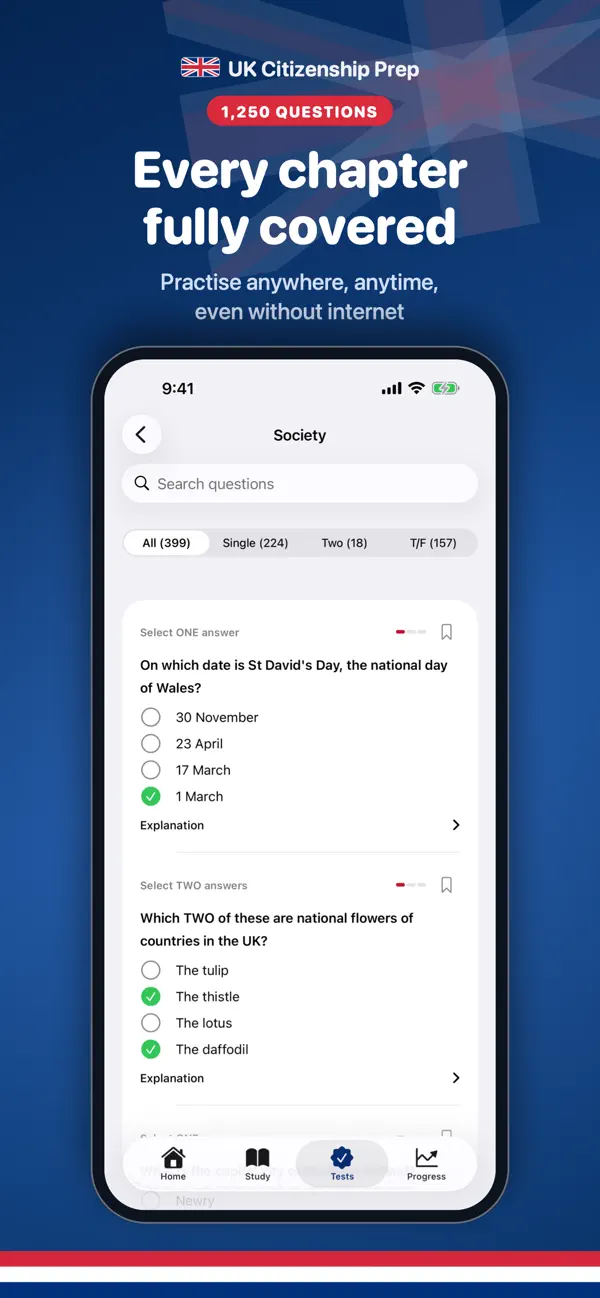
| Practice questions in UK Test Prep | 1,250, across all 5 chapters |
| Ready to book when | You score 21+ out of 24 in several timed mocks |
Every Life in the UK test question comes from one official handbook, so practice questions are the closest thing you will get to the real exam. But there is a right and a wrong way to use them. Answering hundreds of questions until you recognise them is not the same as knowing the material, and the real test rewords things in ways that expose that difference quickly.
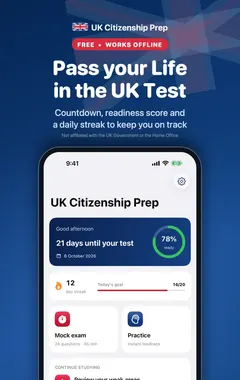
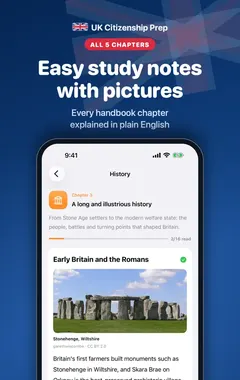
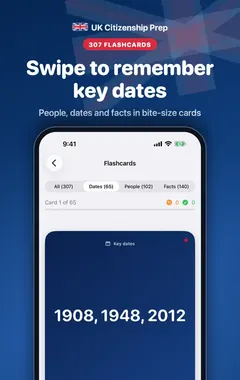
I build UK Test Prep, a free iPhone and iPad app for the Life in the UK test, and the screenshots in this guide come from it. If you want to test yourself as you read, get UK Test Prep on the App Store.
What do the real questions look like?
There are four formats. Here is an example of each, written in the style of the real test, with the answers underneath.
1. Choose one correct answer
When is St Patrick's Day?
A. 1 March B. 17 March C. 23 April D. 30 November
2. True or false
Is the statement below true or false? The Channel Islands are part of the United Kingdom.
3. Which statement is correct?
Which of these statements is correct?
A. Great Britain is made up of England, Scotland and Wales.
B. Great Britain is made up of England, Scotland, Wales and Northern Ireland.
4. Choose two correct answers
Which TWO are fundamental principles of British life?
A. Extremism B. Individual liberty C. Tolerance of those with different faiths and beliefs D. A relaxed attitude towards the law
Answers: 1. B, 17 March (1 March is St David's Day, 23 April St George's Day and 30 November St Andrew's Day). 2. False. The Channel Islands and the Isle of Man are Crown dependencies, not part of the UK. 3. A. Northern Ireland is part of the UK but not of Great Britain. 4. B and C.
Notice that every wrong option in these examples is a real fact from the handbook, used in the wrong place. That is how the real test works, and it is why recognising a date is not enough. You need to know which date goes with which event.
How should I use practice questions?
Use practice questions in three stages, each with a different purpose.
Stage 1: chapter practice (learning)
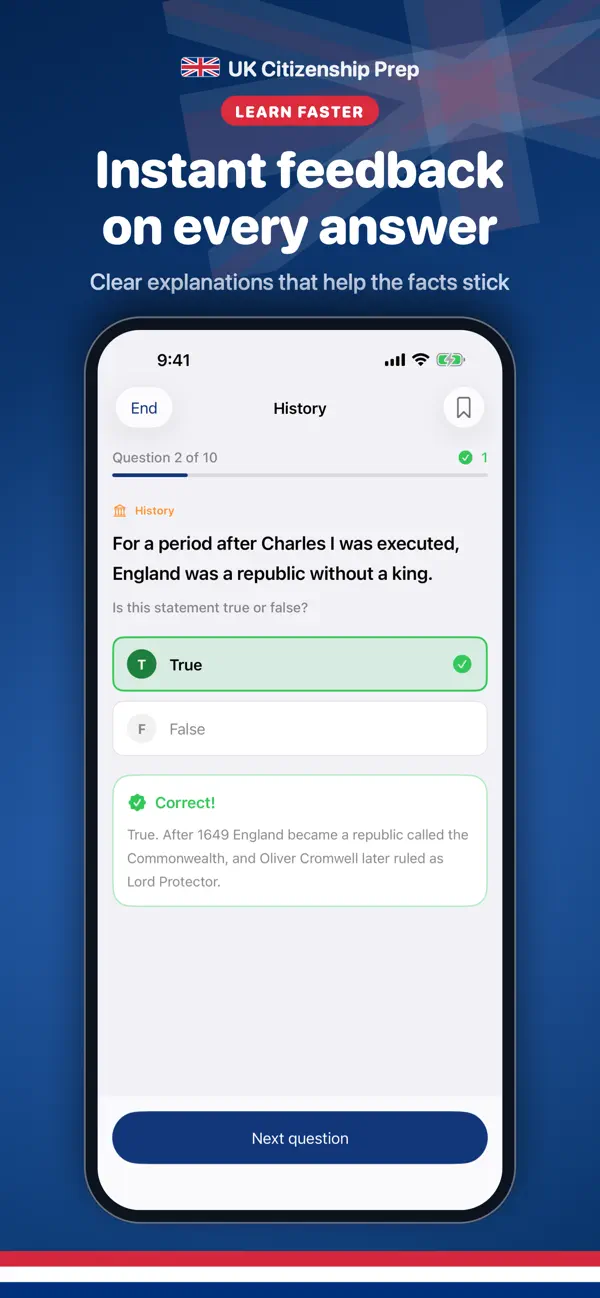
Read one chapter of study notes, then answer questions on that chapter only. The aim is not a high score. It is to find out what did not stick. Read the explanation for every question you get wrong, and also for any you got right by guessing.
Stage 2: weak-area practice (fixing)
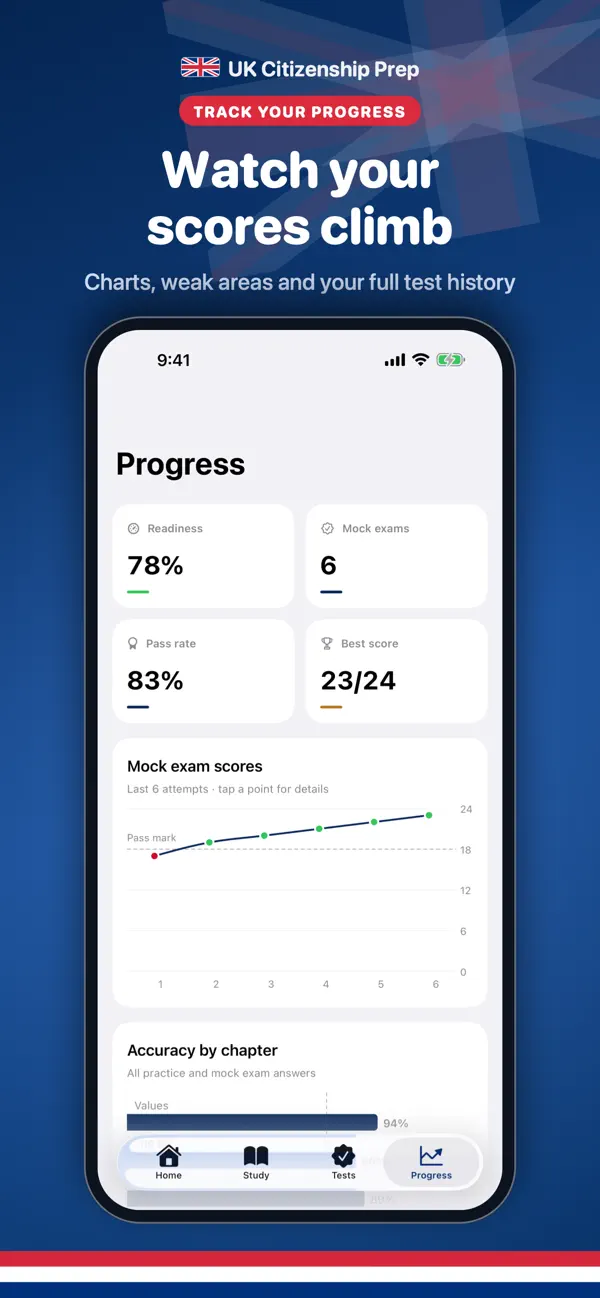
A day or two later, answer only the questions you previously got wrong. This spaced retesting is where most of your learning happens. UK Test Prep builds the weak-areas list for you automatically from your mistakes, so you do not need to keep track yourself.
Stage 3: timed mock exams (rehearsing)
Once all five chapters are covered, take full 24-question mocks against a 45-minute timer. Mocks tell you whether you are ready, and they get you used to reading carefully under time pressure.
How many practice questions should I do?
There is no magic number, but most people who pass comfortably have answered somewhere between 500 and 1,000 questions, including repeats of their weak areas. More useful than a total is a target: when you score 21 or more out of 24 in three or four different mock exams, you are ready to book. That gives you a three-mark safety margin over the pass line.
Which mistakes cost the most marks?
- Answering two-answer questions with one answer. Read the question to the end and check whether it says "TWO".
- Confusing similar dates. For example 1918, when some women over 30 got the vote, and 1928, when women got the vote at 21 on the same terms as men.
- Mixing up the four nations. Patron saints, national flowers and devolved parliaments are a reliable source of questions.
- Overthinking true/false questions. If a statement matches the handbook, it is true. Do not add knowledge from outside the handbook.
The topics behind most of these mistakes are covered in the hardest Life in the UK test topics.
Are free practice questions online reliable?
Some are, many are not. Watch for websites that copy old questions from the 2nd edition of the handbook, which is no longer examined, and for answers that rely on facts not in the handbook. Good practice material is written from the 3rd edition and explains every answer.
UK Test Prep's 1,250 questions are original, written from the 3rd edition and checked against government sources. They are all free, and they work offline.
More guides you may find useful:
- Famous British People in the Life in the UK Test: Scientists, Writers, Artists and Sportspeople
- British Festivals, Traditions and Sport: What the Life in the UK Test Asks
- British History Timeline for the Life in the UK Test: Every Key Date in Order
How UK Test Prep helps
- 1,250 original practice questions across all five handbook chapters, each with an explanation.
- 46 study note sections written from the official handbook.
- 307 flashcards for the dates, people and facts that need memorising.
- A realistic mock exam: 24 questions, a 45-minute timer and the 18-mark pass line.
- A weak-areas list, readiness score, streaks and progress by chapter.
- Works fully offline, with no account. Every feature is free; an optional purchase removes ads.
Download UK Test Prep free on the App Store and pass the Life in the UK test first time. UK Test Prep is independent and not affiliated with the UK Government or the Home Office.
If you are just starting, read the complete guide to the Life in the UK test first, then follow the 4-week study plan.
Frequently asked questions
Are the practice questions the same as the real test?
No. The real questions are not published, so no app or website has them. Good practice questions are written from the same official handbook and cover the same facts in the same formats.
How many Life in the UK practice questions should I answer?
Most people answer 500 to 1,000, including repeats of their mistakes. A better target is scoring 21+ out of 24 in three or four different timed mocks.
What score in mock tests means I am ready?
Aim for 21 or more out of 24 consistently. The pass mark is 18, so this gives you a safety margin for nerves and unfamiliar wording.
What are "choose two" questions?
Questions where two of the four options are correct. You must select both correct options to get the mark, and there is no half mark.
Is there negative marking in the Life in the UK test?
No. A wrong answer scores the same as a blank one, so always answer every question.
Can I memorise the answers instead of reading the handbook?
It is risky. The real test words questions differently and uses real handbook facts as wrong options, so you need to understand which fact goes with which event.
Are questions from the 2nd edition of the handbook still valid?
No. The test is based on the 3rd edition. Older question banks can include facts that are no longer examined.
How do I find my weak areas?
Track every question you get wrong and retest those questions a day or two later. UK Test Prep builds this weak-areas list automatically.
How long does a practice mock exam take?
A full mock is 24 questions with a 45-minute limit, the same as the real test. Most people finish in 15 to 25 minutes.
Can I bookmark difficult questions in UK Test Prep?
Yes. You can bookmark any question to revisit later, alongside the automatic weak-areas list.
Are the UK Test Prep practice questions free?
Yes. All 1,250 questions and every mock exam are free, with no locked chapters and no limits.
UK Test PrepDownload free