 UK Test Prep guide
A 4-Week Life in the UK Test Study Plan (30 to 60 Minutes a Day)
By Muhammad Shahid Khan · · 6 min read
Quick answer
Spend weeks 1 to 3 on the five handbook chapters (history gets a full week), answering practice questions after every study session and reviewing mistakes the next day. Use week 4 for timed 24-question mocks and weak areas only. Book the test for the end of week 4 once you are scoring 21 or more out of 24.
UK Test PrepCitizenship, ILR & Visa Prep · Free on the App StoreDownload free →The Life in the UK test rewards steady, regular study far more than cramming. The handbook is not long, but it is packed with dates, names and numbers. Those stick when you see them again and again over a few weeks, and fade quickly if you try to learn them in a weekend.
I build UK Test Prep, a free iPhone and iPad app for the Life in the UK test, and the screenshots in this guide come from it. If you want to test yourself as you read, get UK Test Prep on the App Store.
This plan assumes 30 to 60 minutes a day, five or six days a week. If you have more time, you can compress it into two or three weeks. If you have less, stretch it out. The order matters more than the speed.
How each daily session works
Every session follows the same pattern:
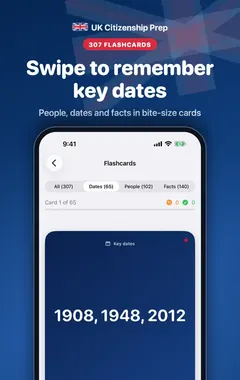
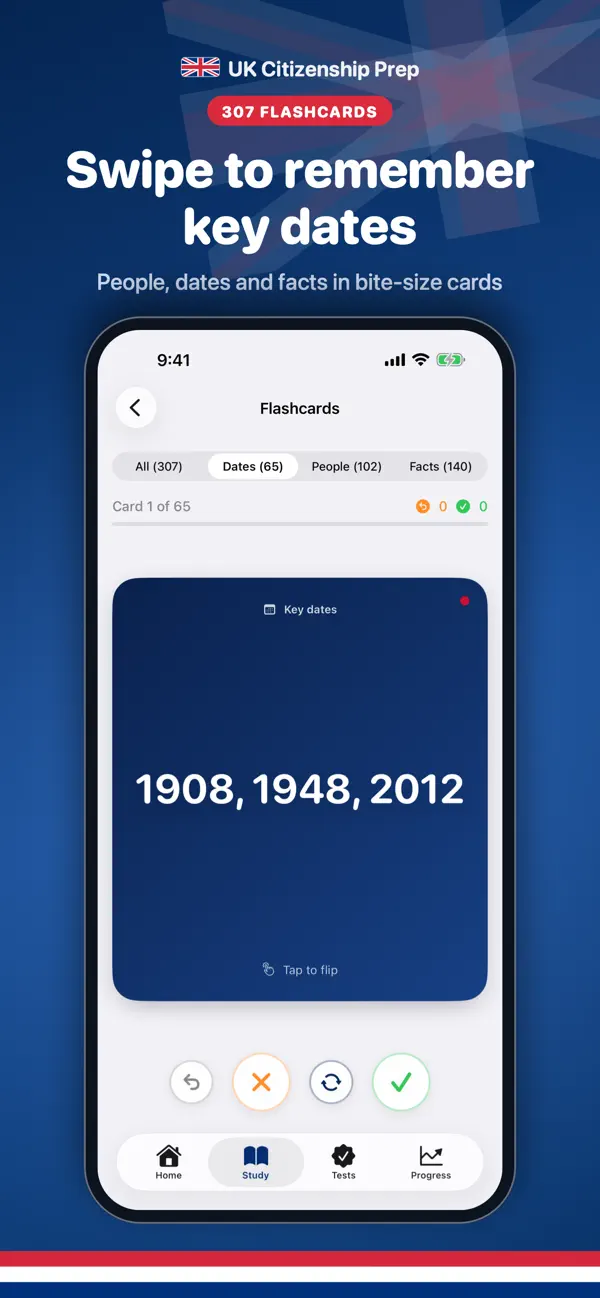
- 10 minutes: flashcards. Review cards from previous days first.
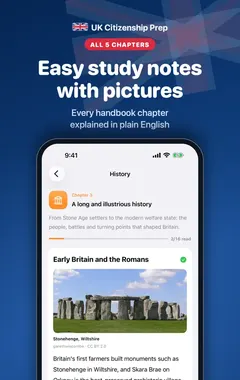
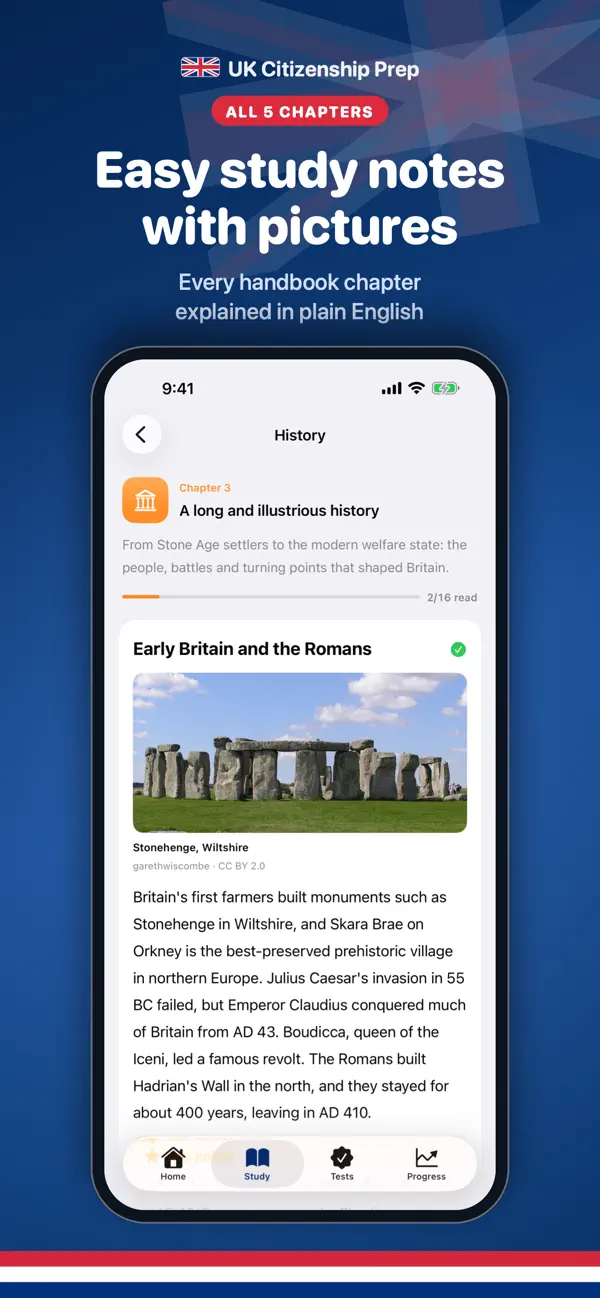
- 15 to 30 minutes: study notes. Read one or two new sections.
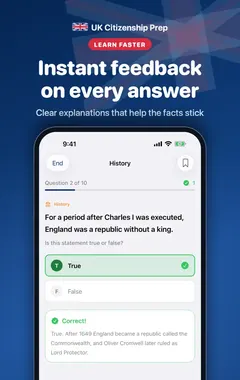
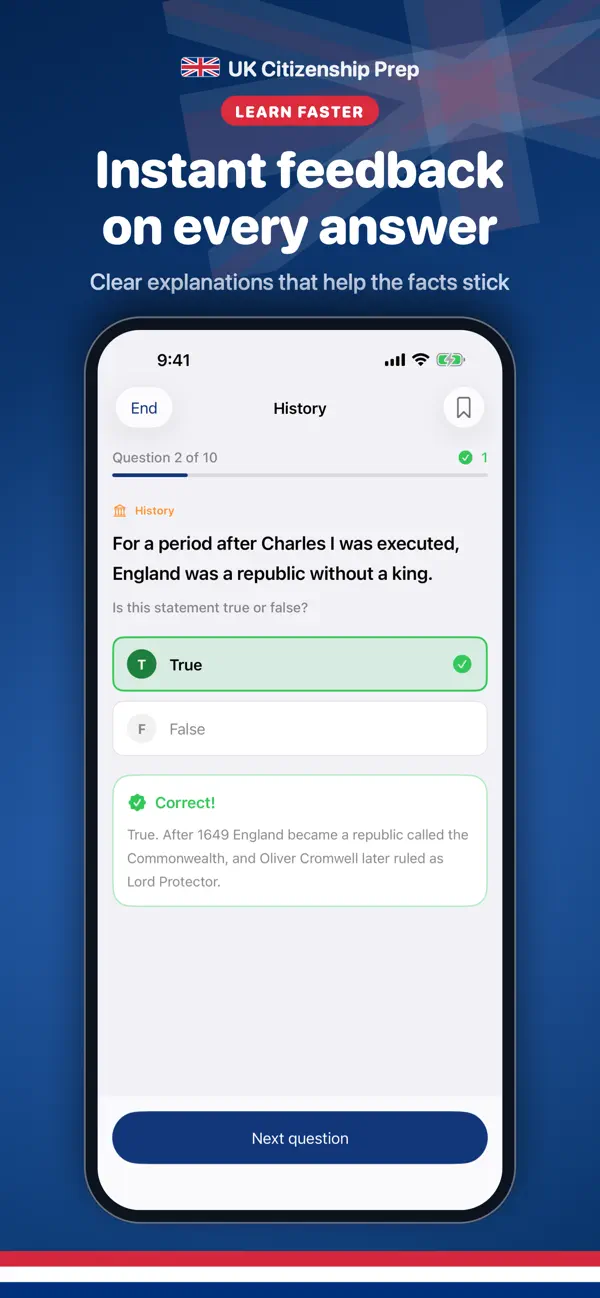
- 10 to 20 minutes: practice questions on what you just read.
- 2 minutes: bookmark anything you got wrong or guessed.
The next day, start with yesterday's mistakes before moving on. That small habit is what makes the plan work.
Week 1: values, the UK and government
Start with the chapters that are easiest to understand, because they build confidence and teach you the handbook's style.
- Days 1 to 2: Chapter 1, the values and principles of the UK. Short and conceptual. Learn the fundamental principles and the responsibilities of people living in the UK.
- Day 3: Chapter 2, what is the UK? Know the difference between the UK, Great Britain and the British Isles, and why the Channel Islands and Isle of Man are not part of the UK.
- Days 4 to 6: Chapter 5, government, the law and your role. Parliament, the devolved governments, elections, the courts and the police. Many questions here are about numbers and ages, so add them to flashcards.
Week 2: history
Chapter 3 is the longest chapter and produces the most questions that people get wrong. Give it a full week.
- Day 1: Early Britain to the Middle Ages, including the Romans, Anglo-Saxons, Vikings, 1066 and Magna Carta.
- Day 2: The Tudors and Stuarts, including the Reformation, Elizabeth I and the Civil War.
- Day 3: A global power: the Glorious Revolution, the Act of Union and the industrial revolution.
- Day 4: The 20th century: the two world wars and the welfare state.
- Days 5 to 6: Review history weak areas, and flashcards every day.
The specific dates that trip people up most are in the hardest Life in the UK test topics.
Week 3: modern society and review
- Days 1 to 3: Chapter 4, a modern, thriving society. Religion, festivals, sport, the arts, literature and famous places. It is a wide chapter, but the questions are usually straightforward.
- Days 4 to 6: review. Retest every weak area from weeks 1 to 3. By the end of the week, your weak-areas list should be getting shorter, not longer.
Week 4: mock exams
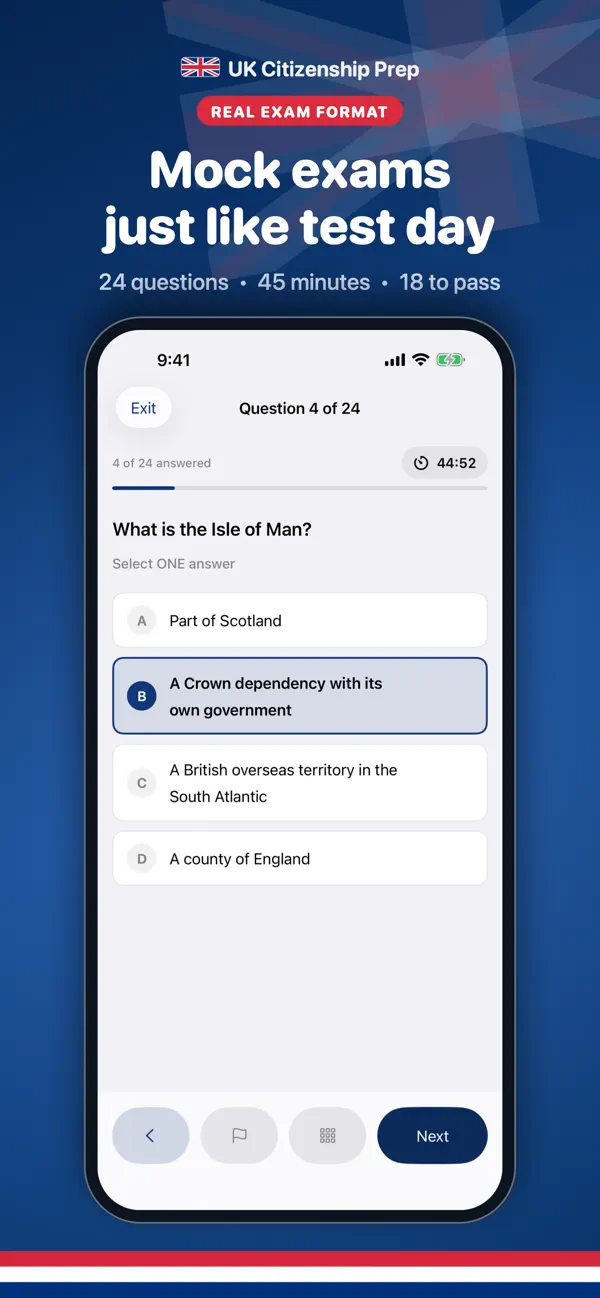
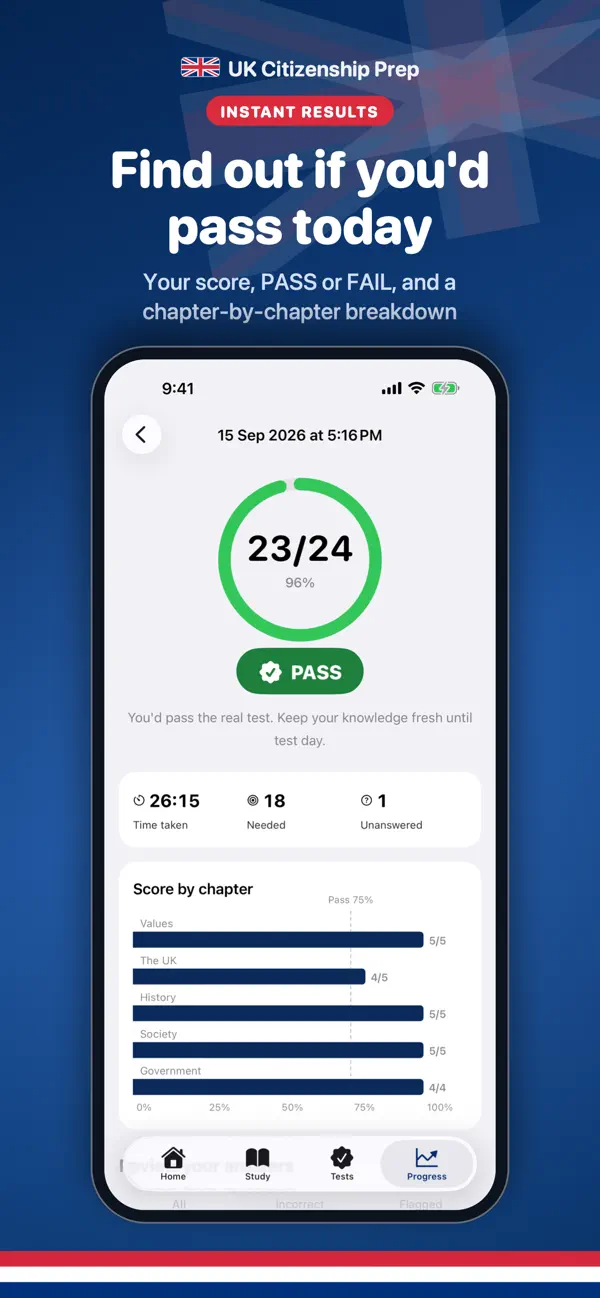
Now switch from learning to rehearsing. Take one full 24-question timed mock most days, then spend the rest of the session fixing its mistakes. Track your scores:
- Below 18: go back to the study notes for your weakest chapter.
- 18 to 20: you would probably pass, but the margin is thin. Keep working on weak areas.
- 21 or more, three or four times in a row: book the test.
Tips that make the plan easier to stick to
- Study at the same time each day. A daily reminder helps it become a habit.
- Use dead time. Flashcards on the bus or in a queue add up to hours over a month. An offline app means no signal is needed.
- Do not skip the review days. Retesting your mistakes matters more than reading new material.
- Keep a streak. Even a 10-minute session keeps the facts fresh.
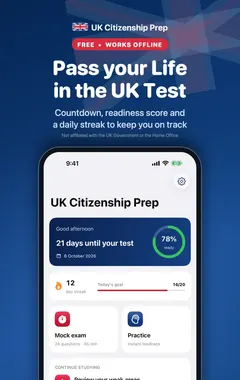
UK Test Prep builds this routine in: daily goals and reminders, streaks, readiness score, an automatic weak-areas list and timed mocks. It is free and works without internet.
More guides you may find useful:
- British History Timeline for the Life in the UK Test: Every Key Date in Order
- British Festivals, Traditions and Sport: What the Life in the UK Test Asks
- Famous British People in the Life in the UK Test: Scientists, Writers, Artists and Sportspeople
How UK Test Prep helps
- 1,250 original practice questions across all five handbook chapters, each with an explanation.
- 46 study note sections written from the official handbook.
- 307 flashcards for the dates, people and facts that need memorising.
- A realistic mock exam: 24 questions, a 45-minute timer and the 18-mark pass line.
- A weak-areas list, readiness score, streaks and progress by chapter.
- Works fully offline, with no account. Every feature is free; an optional purchase removes ads.
Download UK Test Prep free on the App Store and pass the Life in the UK test first time. UK Test Prep is independent and not affiliated with the UK Government or the Home Office.
New to the test? Start with the complete Life in the UK test guide, and see how to use practice questions properly.
How to prepare for the Life in the UK test in 4 weeks: step by step
- Week 1: values, the UK and government. Study chapters 1, 2 and 5. Answer chapter practice questions after each session.
- Week 2: history. Study chapter 3, the largest chapter. Use flashcards daily for dates and people.
- Week 3: modern society and review. Study chapter 4, then retest every weak area from weeks 1 and 2.
- Week 4: mocks. Take a timed 24-question mock most days and fix the mistakes from each one.
- Book the test. Book when you score 21+ out of 24 in three or four mocks in a row.
Frequently asked questions
How long does it take to study for the Life in the UK test?
Most people need 2 to 4 weeks at 30 to 60 minutes a day. People who already know some British history can be ready sooner.
Can I pass the Life in the UK test in one week?
Some people do, with several hours of study a day, but it is risky. Facts learned in a rush fade quickly, and history dates are easy to mix up.
Which chapter should I study first?
Start with chapters 1, 2 and 5. They are easier to understand and teach you how the handbook is written. Leave history for week 2, when you are in a routine.
Which chapter is the hardest?
Chapter 3, "A long and illustrious history", is the longest and has the most dates and names. Give it a full week.
When should I start taking mock tests?
Once you have covered all five chapters, usually in week 4. Earlier mocks mostly show you what you have not studied yet.
When should I book the Life in the UK test?
Book when you score 21 or more out of 24 in three or four timed mocks in a row. You need to book at least 3 days in advance.
How much time should I study each day?
30 to 60 minutes is enough. Regular short sessions work better than long weekend sessions.
Are flashcards useful for the Life in the UK test?
Yes, especially for dates, people, numbers and the patron saints. Review them daily, starting with cards from previous days.
Should I read the whole handbook?
You need to know everything in it, but reading it front to back is not the most effective approach. Study notes split into short sections, followed by practice questions, work better.
Can I study on my phone without internet?
Yes. UK Test Prep works completely offline, including notes, flashcards, practice questions and mock exams.
Does UK Test Prep have study reminders?
Yes. You can set daily study goals and reminders, and the app tracks your streaks and progress by chapter.
UK Test PrepDownload free